
Rights Action supporters may recall that from 1995-2010 we helped fund an empowering education project in the Maya community of Santa Maria Tzeja, Ixcan, Quiche, Guatemala. Over the years, the education program grew to strengthen primary school, and add middle and high school, and scholarships for university.
In the early years, we also helped fund “There Is Nothing Hidden That Will Not Be Made Known”, an extraordinary play that SMT community members helped write, and that SMT students acted in. “There Is Nothing Hidden That Will Not Be Made Known” told the story of the massacre and other military repression suffered by their parents, grand-parents and family members in SMT in the early 1980s.
So empowering was the play, that the students toured to other Mayan villages across Guatemala (including Rabinal where we have long worked) that had suffered and barely survived the same.
Our support for the SMT education was coordinated through a long-time friend and colleague Randal Shea who has lived in and worked with the SMT community for decades now, and was the founder of the education program. Randal shared this letter of gratitude written by one of early beneficiaries of the SMT education program … who also acted in the play.
A heartening read.
(Find Randal’s contact info at the bottom)
A Seed That Blossoms Over Time: A Letter of Gratitude to the Donor Network of the Santa María Tzejá Education Program
From the heart of Santa María Tzejá, in northern Guatemala, I write to you with the deep emotion of someone who knows that words can never fully repay what you have sown.
My name is Santiago Botón Simaj and I am a member of the first graduating class of the Santa María Tzejá Cooperative Middle School in 1997. Today— three decades after that school first opened its doors in 1995, thanks to the unwavering support of people like you—I write to you not merely as one of its beneficiaries, but as a witness to what happens when a community decides to invest in the education of its children.
A Lifelong Debt of Gratitude
When I completed the sixth grade of primary school, opportunities to continue my education in my community were scarce. The Santa María Tzeja Cooperative Middle School radically changed that. Inside its walls, I was provided not only with knowledge but also with new ways of seeing and understanding the world. It was there that I discovered passions I never knew I carried within me: theatre and alternative communication.
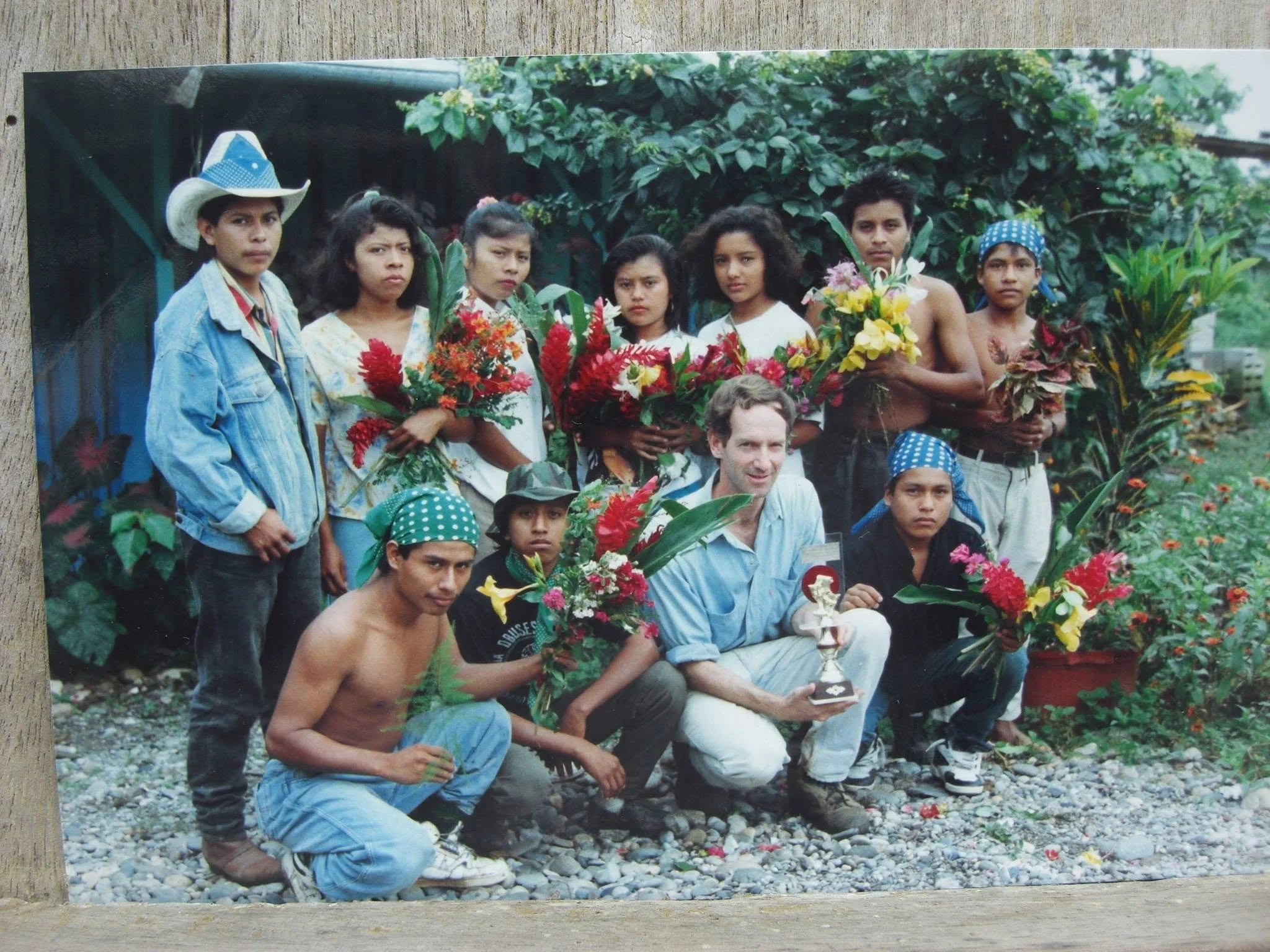
Santiago (far left, standing) shown with fellow cast members and Randall Shea.
Thanks to the support of the educational project’s founder, Randall Shea, I was able to participate in a play that toured the entirety of Guatemala: “There Is Nothing Hidden That Will Not Be Made Known” (*No Hay Cosa Oculta que no Venga a Descubrirse*). It was a piece that courageously recounted the suffering and displacement my community endured in 1982, during the darkest years of the internal armed conflict. That project taught me something no textbook ever could: that art, too, is a form of justice.
Thanks to the support of you and other compassionate people, I received a scholarship that allowed me to continue my secondary education and, ultimately, to study journalism at the university.
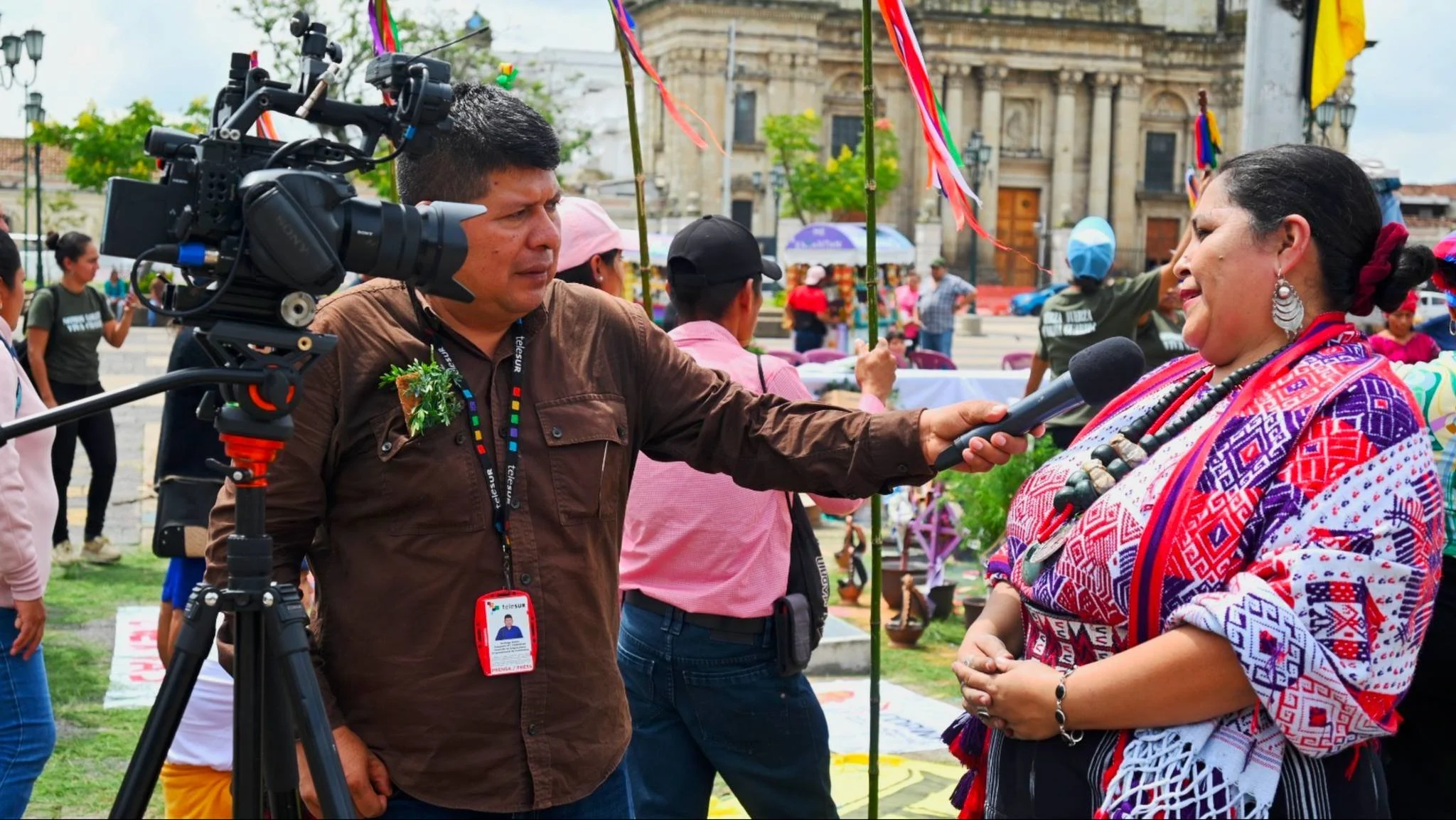
Today—and for over thirteen years now—I have worked as a television reporter for the international news agency teleSUR TV. I am a chronicler of Guatemala’s indigenous rural world. Those familiar with my work regard me as the bridge between the communities that no one listens to and national and international public opinion. And I am all of this because you believed in a school in the middle of the jungle.
Memory Returns to the Stage
This year I had the privilege of returning to the school that shaped me. The Committee of Victims of the Internal Armed Conflict of Santa María Tzejá asked me to collaborate with the 8th and 9th grade students on the creation of a play to commemorate the 44th anniversary of the military incursion of February 13, 1982.
After a week of intense rehearsals—working with teenagers who initially watched with shyness but then embraced the project wholeheartedly—The Path of Memory (El Sendero de la Memoria) was born: a 60-minute itinerant piece that guides the spectator through five stations within a community nature reserve, moving from the trauma of exile to the reaffirmation of human dignity.
On the afternoon of February 14, 2026, the first scene unfolded in a tense silence. Everything seemed to indicate that the performance would fail to achieve its purpose. But then came the second scene: a collective dance evoking the community's joy prior to the tragedy. The narrator, Estela Elvira García Hernández—herself a former student of the middle school and a former Randall Shea scholarship recipient—ignited something within the audience that could no longer be extinguished.
“The makeshift space beneath the trees, at the edge of the soccer field, filled with emotion. Spectators spontaneously joined in the dance. Emotions shifted with the rhythm of each scene—unstoppably.”
What sets this production apart from conventional theater is its deeply participatory nature. There is no single protagonist: the audience is the protagonist. The students serve as emotional catalysts. And the community landscape—its trees, its paths, its sky—becomes an essential part of the story.
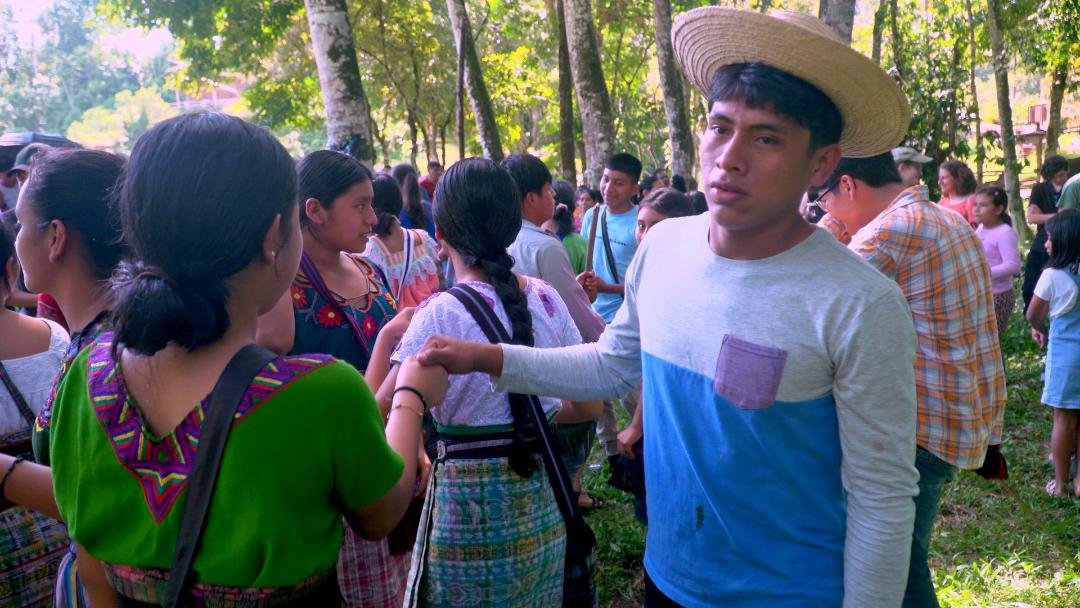
Students dancing with community members.
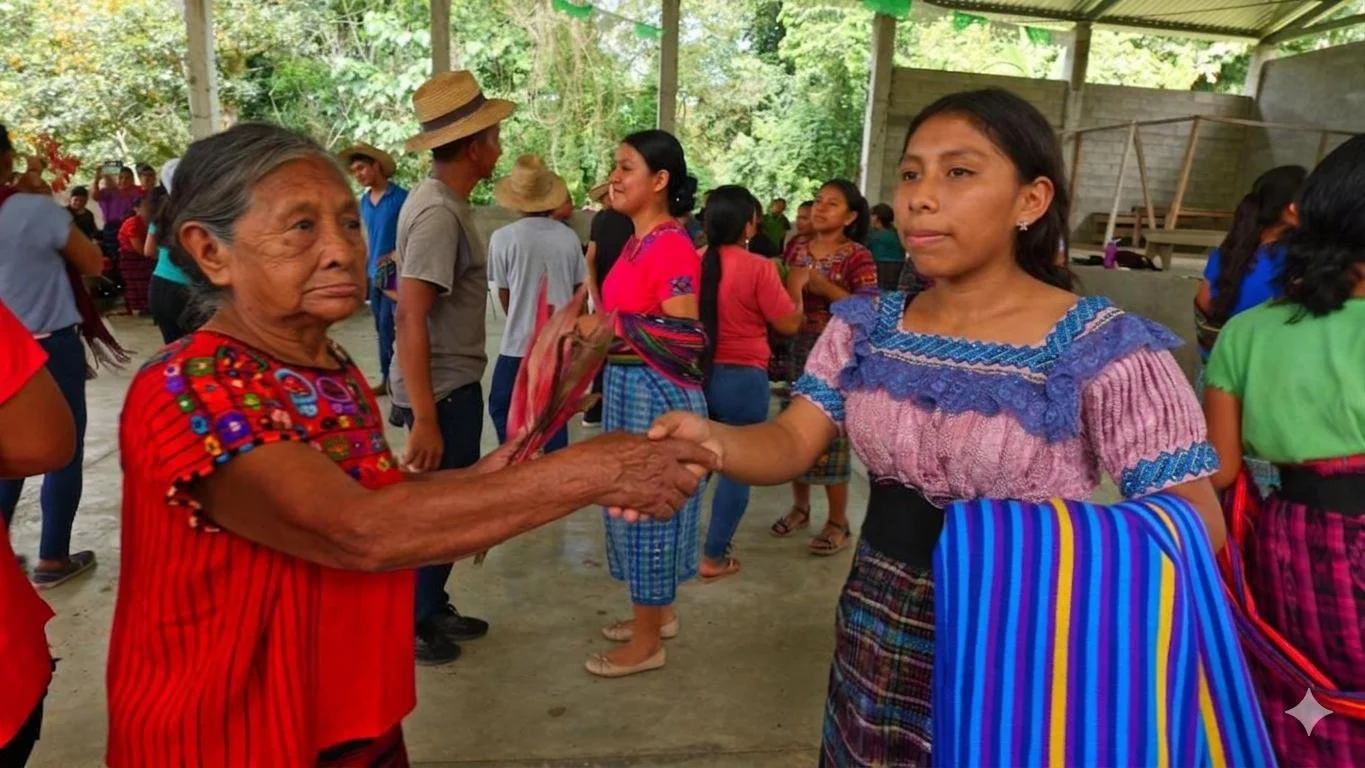
The Voices That Cannot Be Silenced
Something unforeseen occurred during the dramatization of the first night in the jungle. From the audience—without any prior planning—two survivors emerged to offer their testimonies in their own living voices.
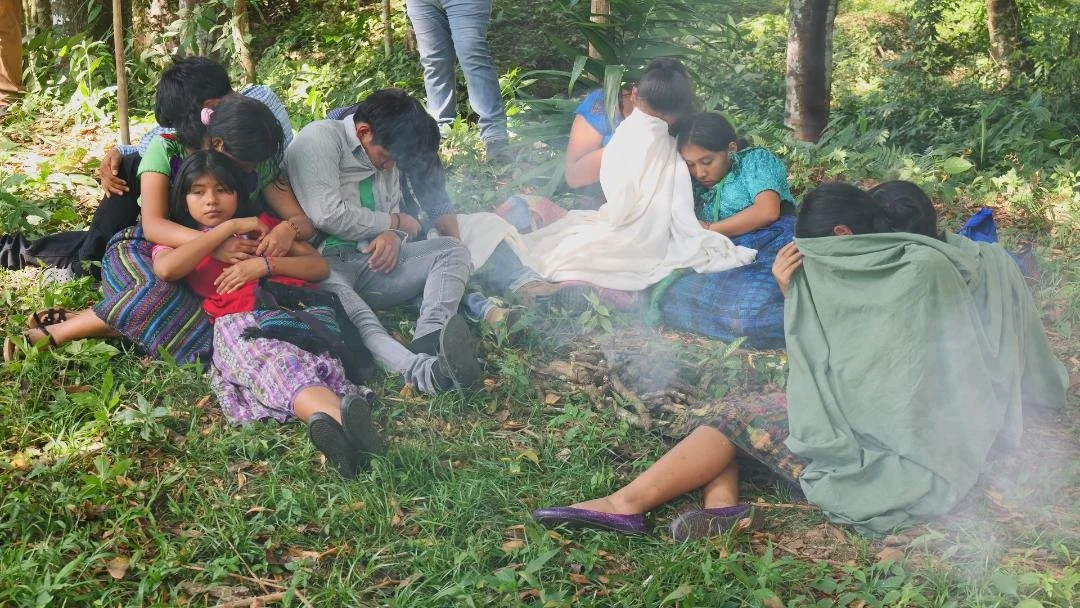
Pedro Canil González recalled that first night in the mountains with deep sighs: entire families fleeing with their children, hiding among the trees, sleeping out in the open, sustained barely by leaves serving as improvised shelter.
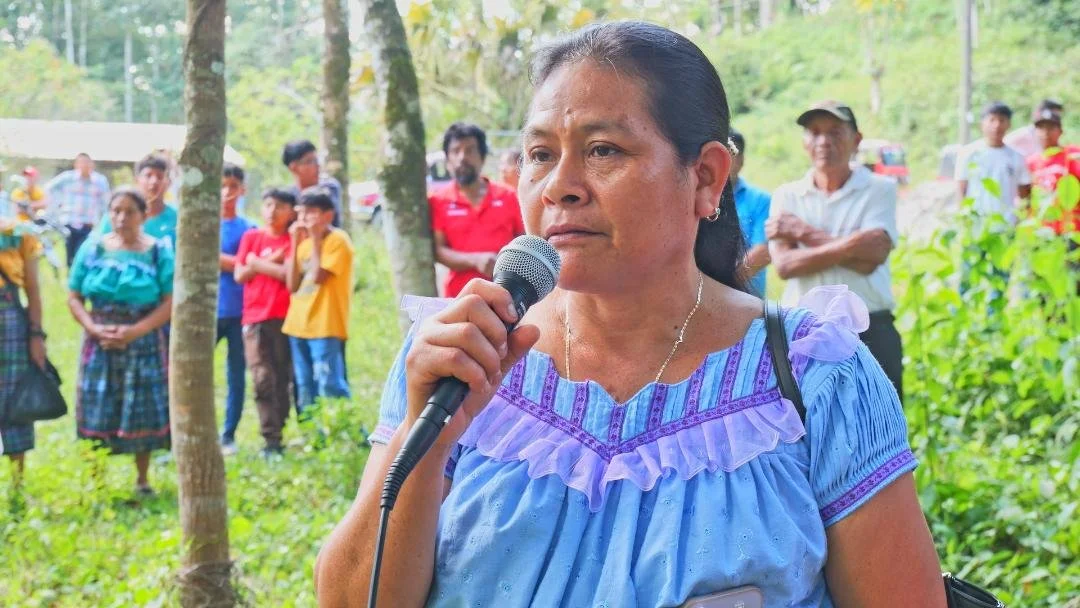
Estela Larios, the daughter of a murdered father, evoked that same night through the lens of loss: with no time to gather their belongings, huddled beneath rocks in silence, waiting for the soldiers while fire consumed their homes, their crops, and their animals.
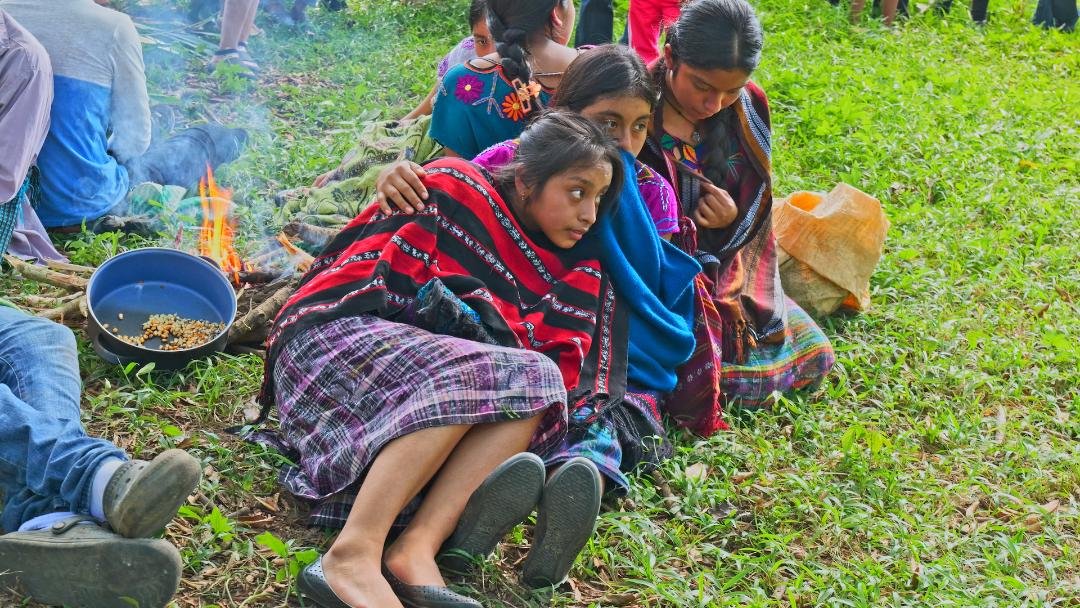
Re-enactment of the 1982 violence
When Memory Transcends Borders
News of The Path of Memory went viral across national and international digital media. Outlets such as Prensa Comunitaria and other platforms disseminated the story widely. In my experience as a field journalist, few events have impacted me so profoundly.
Days later—while covering a story more than 460 kilometers away from my home community, at a museum in Santa Ana, Petén—the very first words spoken by the people I encountered were about the work produced by the Santa María Tzejá Middle School. The same thing happened in Cobán, Alta Verapaz. And later, during the International Women's Day march in Guatemala City, women who had never even set foot in Ixcán congratulated the middle school students as if they had been there themselves.
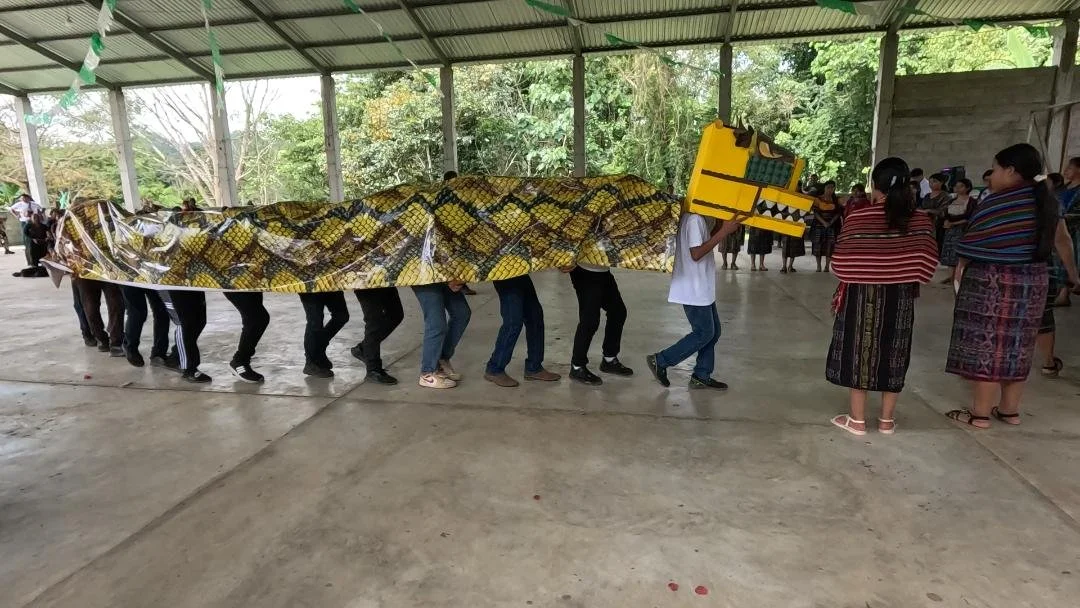
Invitations soon began to arrive. In record time, a second production was written: Yich'kan: Mother Serpent (Yich'kan: Madre Serpiente) which was presented in the community of Copal AA La Esperanza—in the municipality of Cobán, Alta Verapaz—as part of the March 8th commemoration of International Women’s Day.
Its title derives from an ancient Maya term that identifies the serpent as a living metaphor for the rivers winding through the Ixcán territory: the Chixoy River, the Ixcán River, and the Tzejá River.
But before the work even began, something extraordinary was already taking place. In the early hours of March 5, 2026, the students' faces—including several eighth-graders joining for the very first time—said it all, revealing the pure happiness of those who know they are about to experience something that cannot be found in any classroom.
They boarded vans and other transport bound for the community of San Marcos Rocnimá, where three boats awaited them to make the crossing to Copal AA. For the majority, it was their first time ever boarding a boat. The legendary Chixoy River—that very river they had only read about in books, the one appearing on maps and in the legends of their own land—was now right there, real and immense, its breezes caressing their faces.
In the eyes of many, joy mingled with a degree of genuine apprehension. It was a journey short in distance, but immense in experience.
“What books could not give them, that river gave them in a matter of minutes: the certainty that the territory they had learned to name could also be felt on the skin, smelled in the air, and revered with a racing heart.”
Upon their arrival, another unexpected gift awaited them: an artisanal breakfast prepared by a local mother from Copal AA La Esperanza. It was simple—crafted by the hands of someone eager to offer a warm welcome—yet, according to everyone who tasted it, it was a feast fit for the gods. That breakfast served to completely dispel any lingering nervousness. And so, sated, awestruck, and with the energy of the river still coursing through their bodies, the students took the stage.
As the performance drew to a close, the day offered one final gift: a visit to the complex of natural waterfalls known as "La Catarata de los Copones"—one of the most beautiful and rarely visited spots just outside the municipality of Ixcán. Many residents of the region have never even made the journey there. On that day, however, the middle school students experienced it not merely as ordinary tourists, but as artists who had just accomplished something truly worthy of celebration.
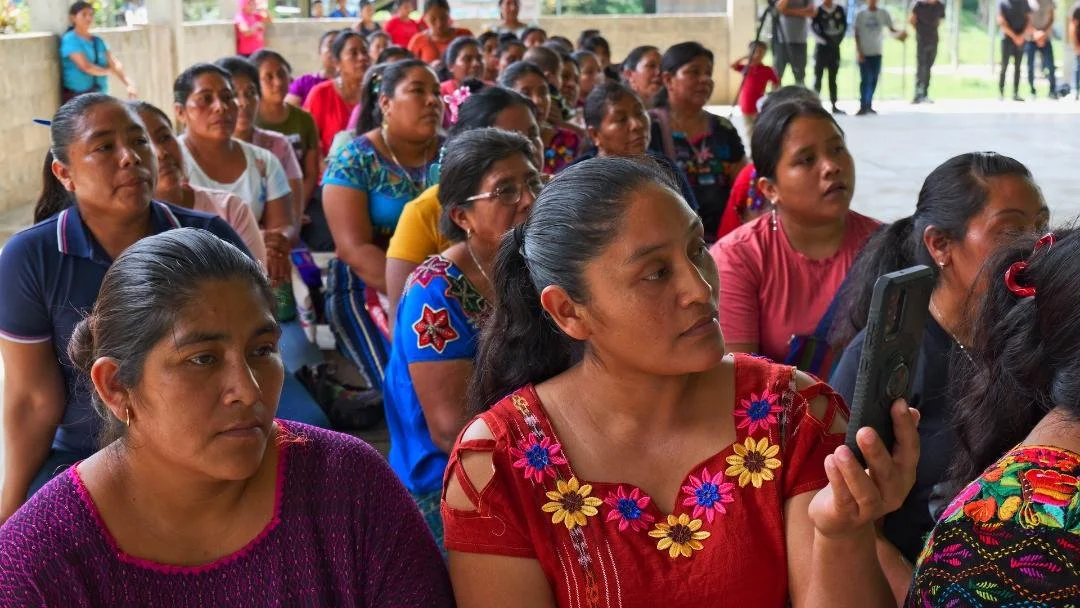
The audience at that second performance in Copal AA brought together what had seemed impossible to unite: survivors of military repression and some former female guerrilla fighters, alongside Maya Q'eqchi' women—the wives of former military patrolmen. Despite their conflicting histories, they all maintained a profound sense of respect. At the conclusion, several women spoke up, visibly moved and expressing genuine solidarity with those who had suffered.
The middle school students remained silent and wide-eyed whenever a woman took the floor.
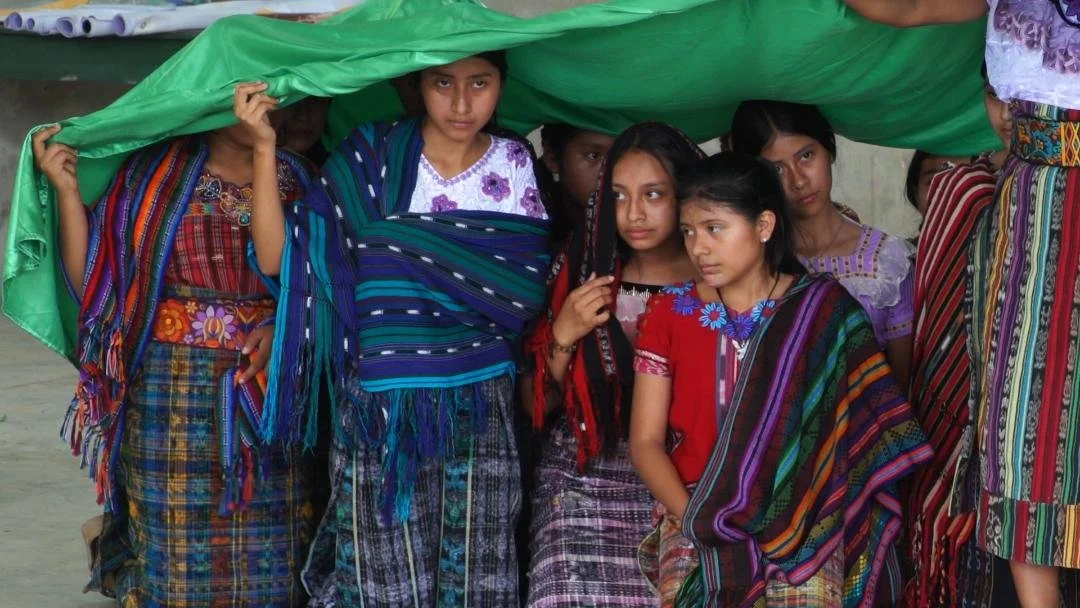
A scholarly observer present in Copal AA remarked that the play was equivalent to reading at least six history books on the massacres in Ixcán.
Concepción Suárez Aguilar, a human rights defender from Chiapas, Mexico, described the experience as a "living memory" that not only preserves history but also activates it within the body and social consciousness.
These works are not merely plays; they are ceremonies, collective spiritual experiences.
Through narrative, music, and sounds, flavor; through the shared corn tamalitos and the pinol — that artisanal corn flour whose aroma evoked the passage of time — they activate memories and emotions that lie hidden within the collective unconscious.
Both performances featured students who, according to their own parents, would never have participated in any other extracurricular activity or in any other setting. And what was most remarkable was this: for the first time in a long while, three generations were attentive and fully present—simultaneously, in the same space—participating in every single scene.
As the performances drew to a close, attendees departed with a sensation difficult to describe. Visibly moved. Profoundly stirred. Transformed.
That is what you have built over 31 years
Thirty-one years ago, when the educational program in Santa María Tzejá began, no one could have guessed that that institute would train a journalist who, today, covers the reality of indigenous peoples for the world.
No one could have imagined that the children of survivors of a military massacre would one day take to an improvised stage beneath the trees to tell—with artistry and dignity—the story that their grandparents barely survived.
No one anticipated that a play created during a single week of rehearsals would move women in Guatemala City who had never even heard the name Santa María Tzejá.
But that is what happens when you invest in education. That is what occurs when a community is able to learn, to think, to create, and to remember with pride who they are. The impact of your generosity cannot be contained in any report. It is not measured in classrooms built or books distributed. It is measured in lives that found their voice. In young people who dared to stand before their elders and tell them: "We, too, carry your history. And we will not forget it."
When the final dance of The Path of Memory shifted direction—from counter-clockwise, signifying a gaze toward the past, to clockwise, signifying a movement forward—something was sealed within the hearts of all those present. It was not merely a choreographic gesture. It was a collective promise: to honor the pain without becoming trapped within it; to build community upon the ruins of what was destroyed.
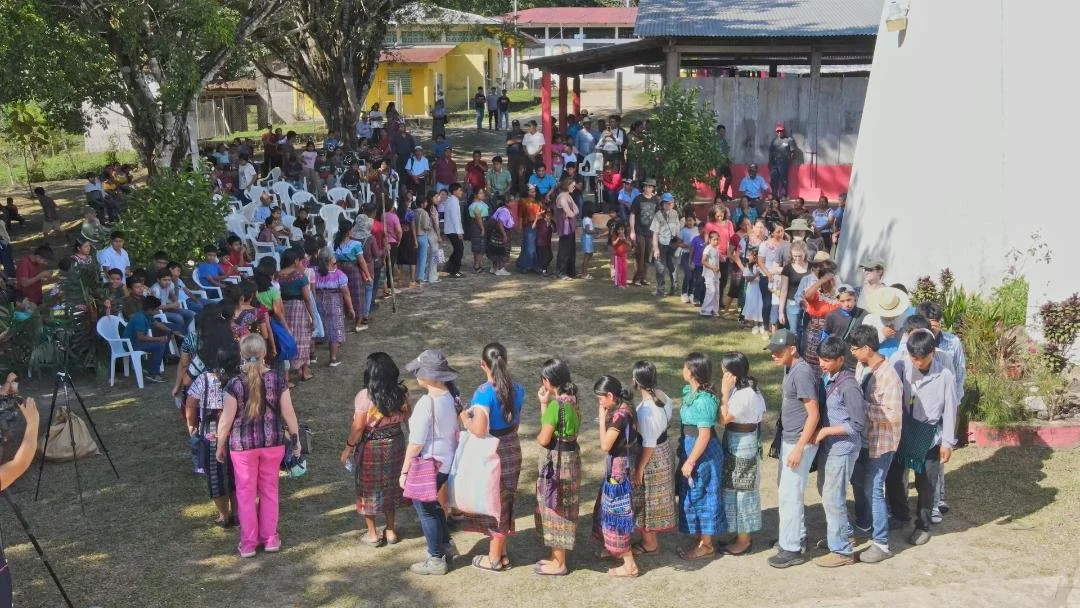
Dance of remembrance in front of the church.
That promise exists because you existed first. Because, for over three decades, you decided that a distant, Indigenous community—survivors of war—deserved to have a school. Deserved to have futures.
Thank you. With all my soul. Thank you.
In solidarity, Santiago Botón Simaj
Journalist and Actor, and member of the first graduating class of the Santa María Tzejá Cooperative Middle School, Class of 1997
For more information
On the Santa Maria Tzeja education project, contact Randall Shea: rshea1957@yahoo.com
To make a tax-deductible charitable donation
Go to www.Buildingnewhope.org
or mail check to:
Building New Hope
6401 Penn Ave, 3rd Floor
Pittsburgh, PA 15206
Be sure to indicate that your support is for the “Santa Maria Tzeja education project”