
Guatemalan military murders eight villagers in Huite
On October 21, 2026, Rights Action shared an article Message Sent! Assassination of anti-corruption prosecutor in Guatemala. Juan Francisco Solarzano Foppa was shot over 50 times in broad day light. Now, the military has massacred eight villagers.
Below:
Prensa Comunitaria article: “The Military Killing of Eight People in Huité That the Government Cannot Explain”
“Rosario Paz, one of the residents, said that “Eli” Paz Paiz and her daughters were rolling down the car windows when armed men opened fire on them without warning. She blames the Guatemalan Army and the U.S. Drug Enforcement Administration (DEA) for this attack.”
Guatemala remains firmly dominated by the corrupt, violent political interests of the Pact of Corrupt traditional economic, military and political elites. This violence will likely increase in lead-up to the June 2027 elections.
With the risk of over-generalization, since 1954 the U.S., Canada and the West, in general, have maintained full and beneficial economic, military and political relations with the Pact of Corrupt traditional elites.
This is how local-to-global power and wealth, corruption, violence and impunity work.
The Military Killing of Eight People in Huité That the Government Cannot Explain
Prensa Comunitaria, October 2, 2026
Translation by Rights Action, original in Spanish: https://prensacomunitaria.org/2026/10/la-muerte-de-ocho-personas-en-huite-que-el-gobierno-no-sabe-explicar/
A mother and her two daughters are among eight people killed in a military operation that took place on September 27 in Huité, Zacapa. The families are demanding justice, while the authorities have gone from denying a military incursion to acknowledging their involvement, the extent of which remains unclear.
On the night of Sunday, September 27, in the municipality of Huité, Zacapa, personnel from the Directorate of Criminal Investigations (DICRI) processed four crime scenes: at the entrance to the El Campo neighborhood; in the El Corralito hamlet; in the village of El Encinal; and in the vicinity of the Official Preschool.
Seven deceased individuals were found—three women and four men—all as a result of gunshot wounds.
According to the initial report from the Public Prosecutor’s Office, 77 pieces of ballistic evidence and other items relevant to the investigation were collected, as published on the official X account. The first victims identified were: Vilma Elizabeth Paz Paiz, 56; and her two daughters, Cinthia Gabriela (28) and Uve Lisbeth Paz Paiz (22). They lived in the La Tejera neighborhood. On Sunday night, they were on their way to fill up their car with gas so they could leave early the next day. On the way, they were attacked at the entrance to Huité.
Uve Lisbeth was also originally from the La Tejera neighborhood and worked at the Alimentos y Bebidas Atlántida S.A. distribution and bottling plant, an outsourcing partner of the carbonated beverage company Coca-Cola. Her coworkers described her as a determined young woman and a dreamer, and they lamented that the violence plaguing Guatemala had taken her life. As for Cinthia Gabriela, 28, those who knew her described her as a young woman without any problems.
Rosario Paz, one of the residents, said that “Eli” Paz Paiz and her daughters were rolling down the car windows when armed men opened fire on them without warning. She blames the Guatemalan Army and the U.S. Drug Enforcement Administration (DEA) for this attack.
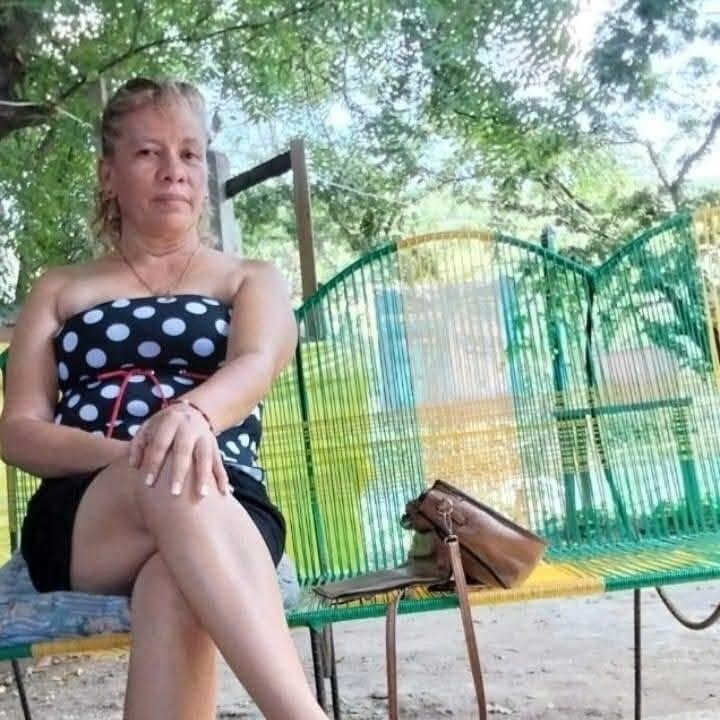
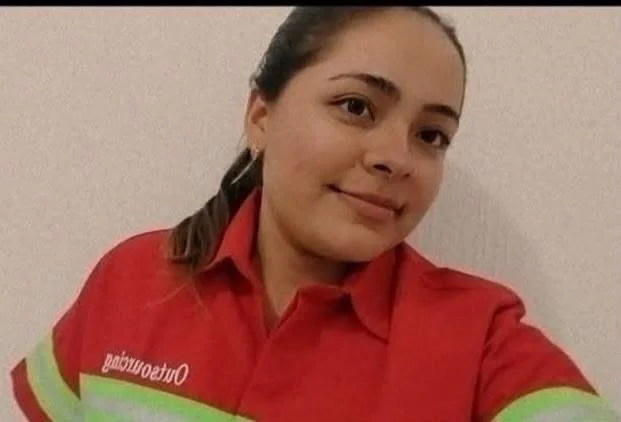
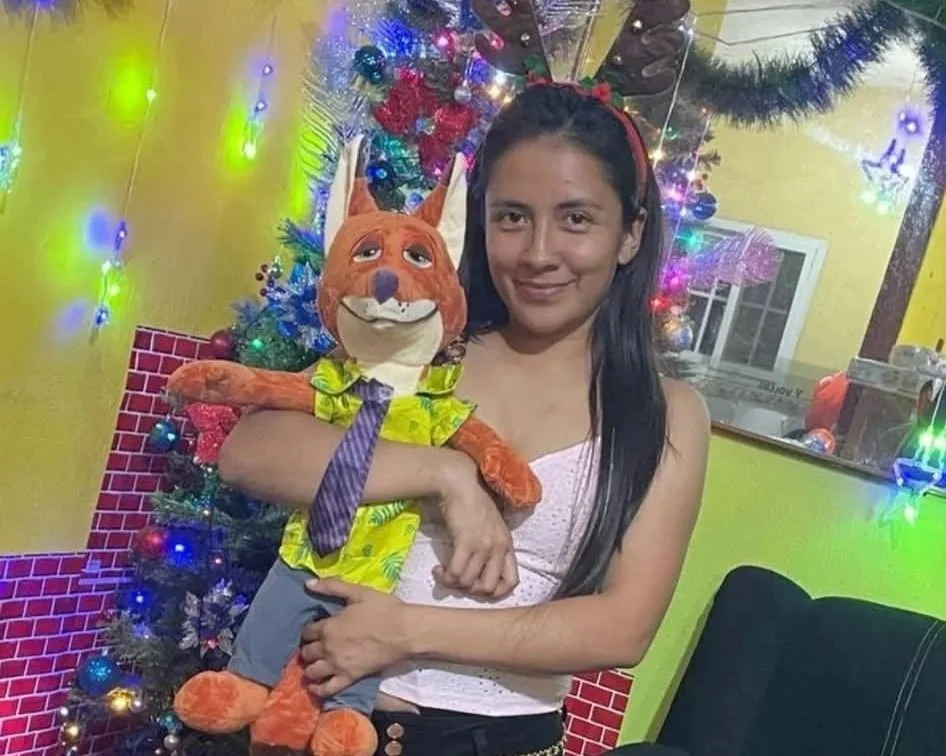
Vilma and her two daughters were getting ready for the next day and only went out to fill up on gas.
(Photos images caption from social media)
The National Institute of Forensic Sciences (Inacif) also identified Juan Carlos Pedroza Agustín, 45; Mario René Romero Díaz, 63; and Carlos Donato Paiz Mateo, 32. All died from gunshot wounds after being riddled with bullets on the soccer field.
According to Infobae, Pedroza Agustín was a municipal employee who was walking near the soccer field when the shooting began; he died at the scene.
In addition, of the six people identified by INACIF, the Municipality of Huité published an obituary identifying 14-year-old Denis Alonzo Herrera as another victim. Ludwin Estuardo Nájera, also 33, was taken to Roosevelt Hospital with gunshot wounds and died at the medical center. According to reports, Nájera noted that there were helicopters flying over Huité and claimed that Denis Alonzo’s murder occurred because “he looked up at the helicopters.”
That incident was one of several attacks that, in total, resulted in the deaths of eight people, according to data released by the Public Prosecutor’s Office (MP).
After the massacre, on Tuesday, September 29, the coffins were taken to Huité’s central park, where dozens of people offered support to the families and accompanied the funeral procession. Photographs were displayed at the site, and funeral rites were performed for the victims before they were taken to the local cemetery.
Mayor Leonel Humberto Paz López declared a municipal period of mourning, and the Children’s Day celebration and the San Francisco Fair were canceled.
Four Scenes and a Hypothesis That Doesn’t Explain the Deaths
The District Attorney’s Office reported that at 5:30 p.m. on Sunday, September 27, armed men entered the area, and the hypothesis is that they were tracking Haroldo Waldemar Lorenzana Terraza, alias Haroldito, identified by U.S. authorities as the leader of a drug trafficking organization.
Up to this point, the various accounts seem to agree, but when it comes to determining which group the perpetrators of the attacks belonged to, the accounts begin to diverge, as neighbors and relatives of the victims point to DEA agents and members of the Army. There is talk of a dispute with other organized crime groups as well as bounty hunters.
The Municipality rejected the description of a clash between armed groups and maintained that a commando unit entered the area and used excessive force; it is therefore requesting a thorough and impartial investigation.
An official account riddled with contradictions
The Army went from denying the incursion and its involvement in the clash to acknowledging a military operation that has yet to be clarified.
On Monday, September 28, Army spokesperson Nathalia Mollinedo denied that it was a military incursion and attributed it to a territorial dispute involving organized crime, rejecting the claim that the uniforms and equipment of the men in question belonged to the institution.
However, hours after these initial statements, Mollinedo acknowledged a military deployment in Huité—following videos that began circulating on social media showing J8 vehicles (vehicles donated by the United States to the Army) and two trucks carrying soldiers. Mollinedo maintained that the troops avoided entering the area of the clash so as not to escalate the violence.
That same day, Interior Minister Marco Villeda denied that National Civil Police (PNC) forces had been called in for any operation.
A day later, on Tuesday, September 29, the Ministry of National Defense (Mindef) confirmed that the J8 vehicles and the trucks carrying soldiers that appeared in the videos belonged to the Army and were part of the Second Infantry Brigade.
According to the institution, the first incident occurred between 5:00 p.m. and 6:00 p.m., while the military deployment took place between 8:00 p.m. and 9:00 p.m. It also stated that the units remained at the access points and that they encountered barricades.
Regarding a J8 vehicle spotted near the site where the three women died, it stated that it was outside Huité, though it did not provide an exact location.
It was not until September 30—and after avoiding making statements to the media during other public events—that President Bernardo Arévalo acknowledged the involvement of Army personnel and units. Without clarifying what happened and avoiding the term “military operation,” he announced that a commission from the Ministry of Defense would determine the scope and nature of that action.
“No, the National Civil Police were not involved. The police arrived only after the events had taken place, to assist the Public Prosecutor’s Office in carrying out its duties and to maintain order in the town. As for the Army, there was indeed involvement by Army personnel; the investigation being launched by this multidisciplinary commission within the Ministry of Defense will determine the scope, nature, and manner of their operations in that context,” he said.
Arévalo avoided characterizing the incident as a military operation and, hesitantly, said that they would have to wait for the report to determine whether any mistakes were made. “We are being very careful not to jump to any conclusions until the commission has completed its investigation into this case; that report will provide insight into how, when, and under what circumstances this situation unfolded. So there will be greater clarity on this matter shortly… We have to wait to understand what happened and to be able to identify—if any—where mistakes were made, whether it was an operational issue, or what exactly occurred.”
At that press conference, Defense Minister Henry Sáenz explained that the initial information had been updated and acknowledged the involvement of a military unit, but the government did not explain what that unit did.
Military Investigating Itself
The Defense Ministry indicated that the commission will be composed solely of personnel from various Army units and will evaluate administrative and operational aspects, although it did not announce a specific deadline for submitting the report nor did it publicly identify the units or commanders under investigation.
At the same time, the Public Prosecutor’s Office is continuing its criminal investigation, and, according to Sáenz, the two agencies will collaborate to clarify the facts and will present the results of the military review.
Rights Action
As the work and struggle continue from Argentina to Canada for real democracy, for a fair and just local-to-global economic model, and human rights for all, Rights Action will continue to denounce corruption of Guatemala’s legal system and administration of justice, systemic repression, and the criminalization, jailing and forcing into exile of hundreds of lawyers, judges and prosecutors, and land, rights and environmental defenders. We will continue to send grassroots funding in support of victims (and their lawyers and advocacy groups) of this systemic repression and lawfare.
Change media sources
Rights Action urges folks to diversify news sources as antidote to oftentimes propagandistic reporting of government and corporate media in U.S. and Canada. Democracy Now, Gray Zone, DropSite News, Real News Network, CounterPunch, Intercept, Canadian Foreign Policy Institute, Breach, rabble.ca, Orinoco Tribune, Electronic Infitada news, Al Jazeera News (for Palestine related reporting), BreakThrough News, Canadian Dimension, …
More information
FAMDEGUA, Asociación Familiares de Detenidos-Desaparecidos de Guatemala, famdegua@gmail.com, https://www.facebook.com/FAMDEGUAG/, https://twitter.com/FamdeguaG
Verdad y Justicia en Guatemala, https://www.facebook.com/VerdadJusticiaG, https://twitter.com/VerdadJusticiaG/
PLATAFORMA CANADA-Guatemaltecos Exiliados por Terrorismo de Estado, https://www.facebook.com/GuatemaltecosExiliadosCanada, https://www.instagram.com/plataforma_canada/
NISGUA (Network in Solidarity with People of Guatemala): www.nisgua.org, https://twitter.com/NISGUA_Guate, https://www.facebook.com/NISGUA.Guate
GHRC (Guatemalan Human Rights Commission): www.ghrc-usa.org, https://twitter.com/GHRCUSA
Breaking the Silence: www.breakingthesilenceblog.com, https://twitter.com/BTS_MG, https://www.facebook.com/BTSGuateMaritimes